Most homeowners spend a lot of time thinking about what happens inside the house. The kitchen layout. The primary suite. Whether the office has enough light. And then, toward the end of the design process, they turn their attention to the outdoor spaces.
This is the part we gently push back on.
In Georgia, outdoor living is not an add-on. A well-designed outdoor space is the reason you host more, unwind more, and simply live better. A poorly planned one ends up underused within a few years, even if it photographs beautifully. The difference almost always comes down to decisions made at the beginning of the design process, not at the end of it.
Start With Zones, Not Features
The most common mistake in outdoor living design is starting with a wishlist. Fireplace. Outdoor kitchen. Pool. Pergola. These are all great things, but stacking features without thinking about how people will actually use the space tends to produce an outdoor area that never quite settles into a comfortable rhythm.
We start with zones instead.
Hot and cool
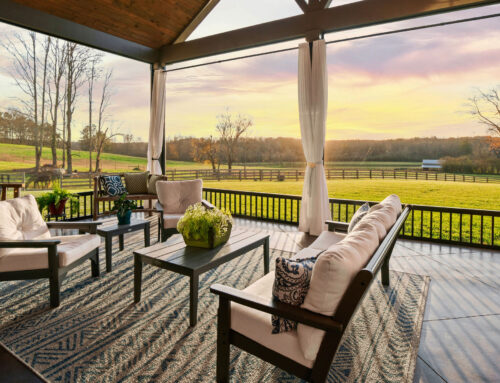
In Georgia, where the heat lands matters enormously. A covered porch oriented to catch afternoon shade gets used in July. One that bakes in direct western sun after three o’clock does not, no matter how well it is built. These decisions happen at the site planning stage. Once the home is placed and the porch is framed, the light is what it is.
Wet and Dry
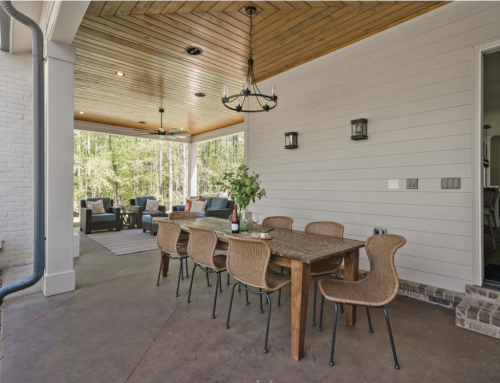
A covered outdoor kitchen adjacent to the house stays functional year-round and earns its cost much faster than one exposed to Georgia’s spring and summer rain. The wet and dry question also applies to drainage around gathering areas and whether your outdoor dining space has any protection from the afternoon thunderstorm that is coming whether you planned for it or not.
Social and Private
Not every outdoor moment is a gathering. A well-planned outdoor space has both social areas designed for flow and people, and private areas positioned so that someone can actually use them without feeling like they are on display. Morning coffee on a side porch nobody else can see from the street. An evening chair tucked away from wherever the kids are.
Large Gathering and Small
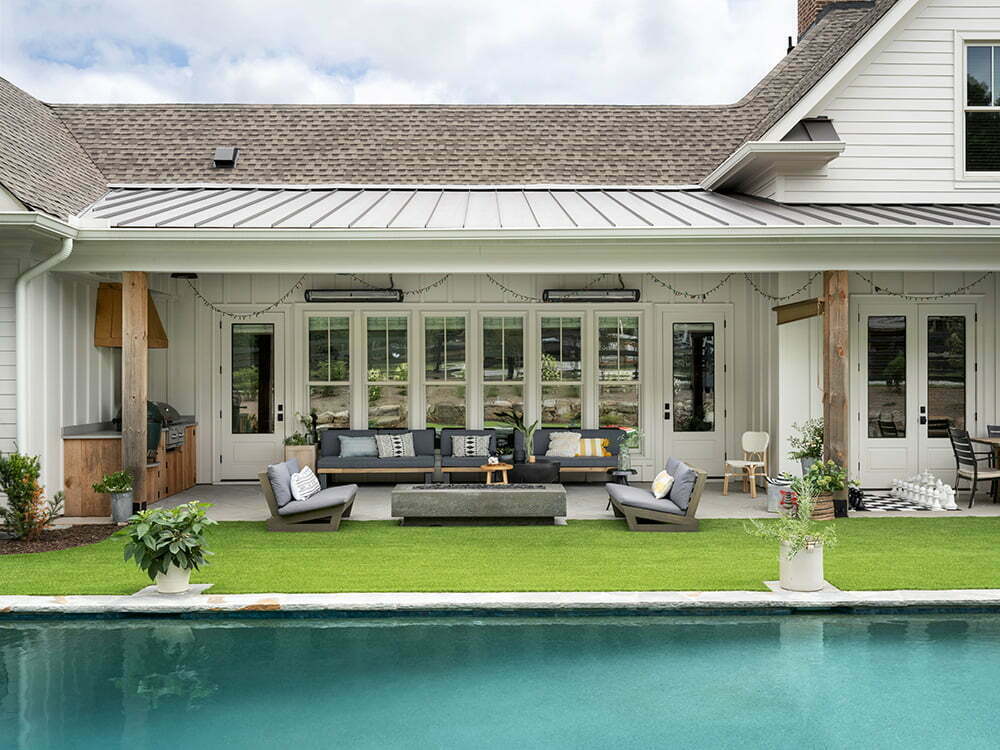
A large patio that works for a party of thirty tends to feel cold when it is just two people on a Wednesday evening. The homes that handle this best have both, even if the smaller space is just a corner defined by a fire feature, a change in material, or a shift in grade. The goal is outdoor space that feels right at different scales, not just optimized for the best-case scenario.
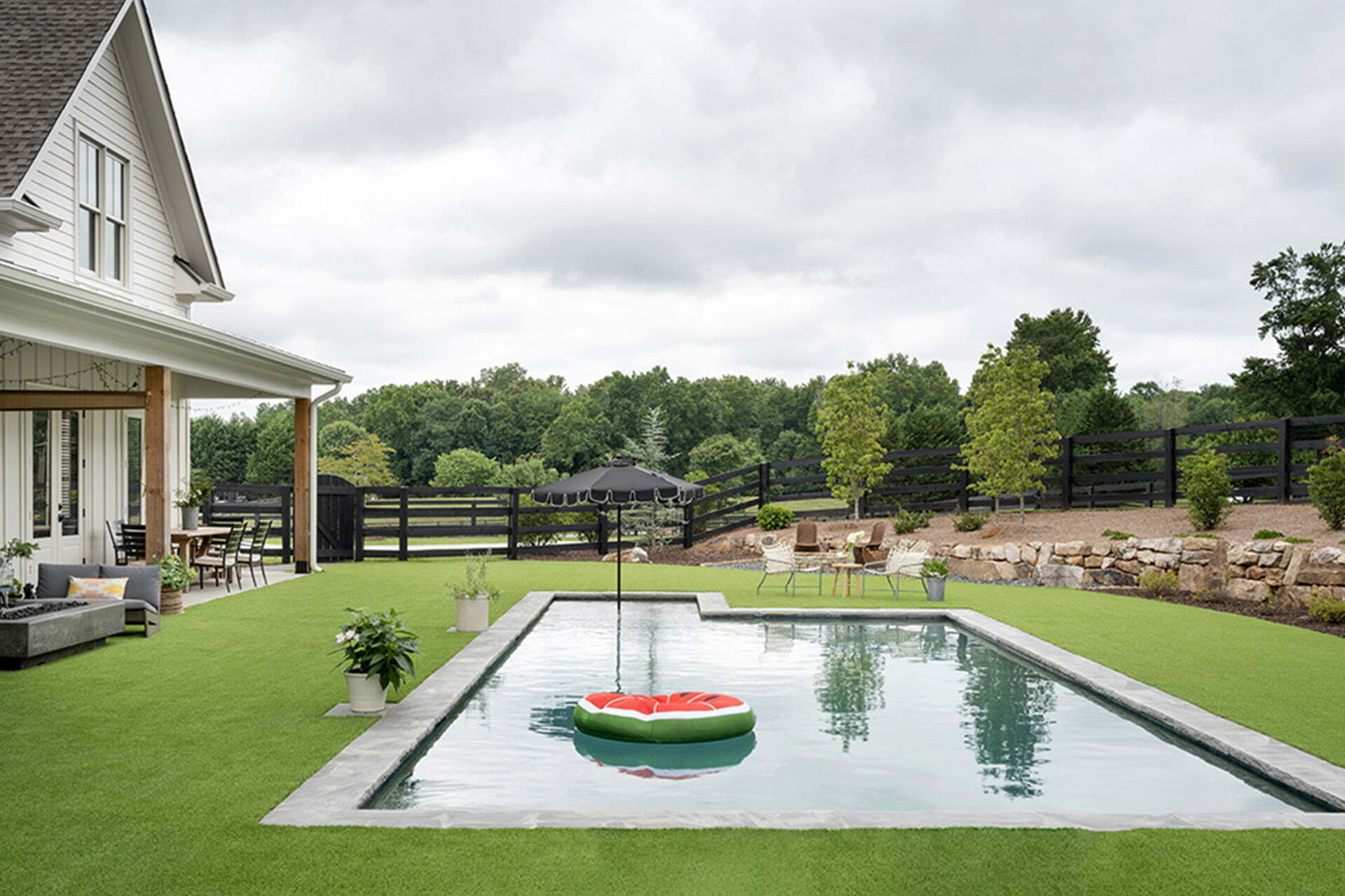
Who Is Actually Using This Space?
This question sounds obvious. The answers are often surprising.
We have worked with families who described their vision as primarily adult entertaining, and then, once we started asking about daily life, it became clear that two large dogs and four kids were going to be the primary users of the backyard for the next decade. That changes the design considerably.
Is there a dog that needs a fenced yard or a wash station near the garage entry? Are there kids running through wet grass and back into the house all summer? Does the household host big groups a few times a year, or is it quietly outside every evening? The answers shape everything from hardscape material to where the outdoor bathroom goes.
Privacy Is Not Just About Fencing
Nobody wants to feel like they are outside in a fishbowl. But and privacy in outdoor design is more nuanced than where the fence line falls. It is about the relationship between the outdoor space and neighboring properties, the street, and other areas of your own yard.
Some of the best privacy solutions are not solutions at all. They are decisions about where the home sits on the land and where the mature trees already are. Those decisions cannot be made after the foundation is poured.
Think About the Path Back Inside
If every path from the backyard runs through the kitchen, your kitchen takes all the damage from summer foot traffic. If the pool area has no easy bathroom access, you will feel that every time someone has to come inside.
A bathroom accessible from the outdoor living area changes how the space functions. An outdoor bar or prep station that keeps people from going back in for drinks changes how a gathering actually flows. These are not luxury additions. They are the decisions that make outdoor living feel effortless rather than managed.
The Conversation That Has to Happen Early
Everything above is a design conversation, and it needs to happen before construction starts. Outdoor living design in Georgia is not a landscaping question. It is a site planning question, a structural question, and an integration question that touches how the home connects to the land from the very first meeting.
At Ecraft, we start talking about outdoor spaces at the same time we start talking about indoor ones. The homes that get outdoor living right are not the ones with the biggest feature list. They are the ones where someone asked the right questions before a single line was drawn.